.png)

Forest Bathing in Hidden National Parks — A Beginner's Shinrin-Yoku Guide for the USA
Published by Hidden Parks USA · Last updated March 2026 · 8 min read
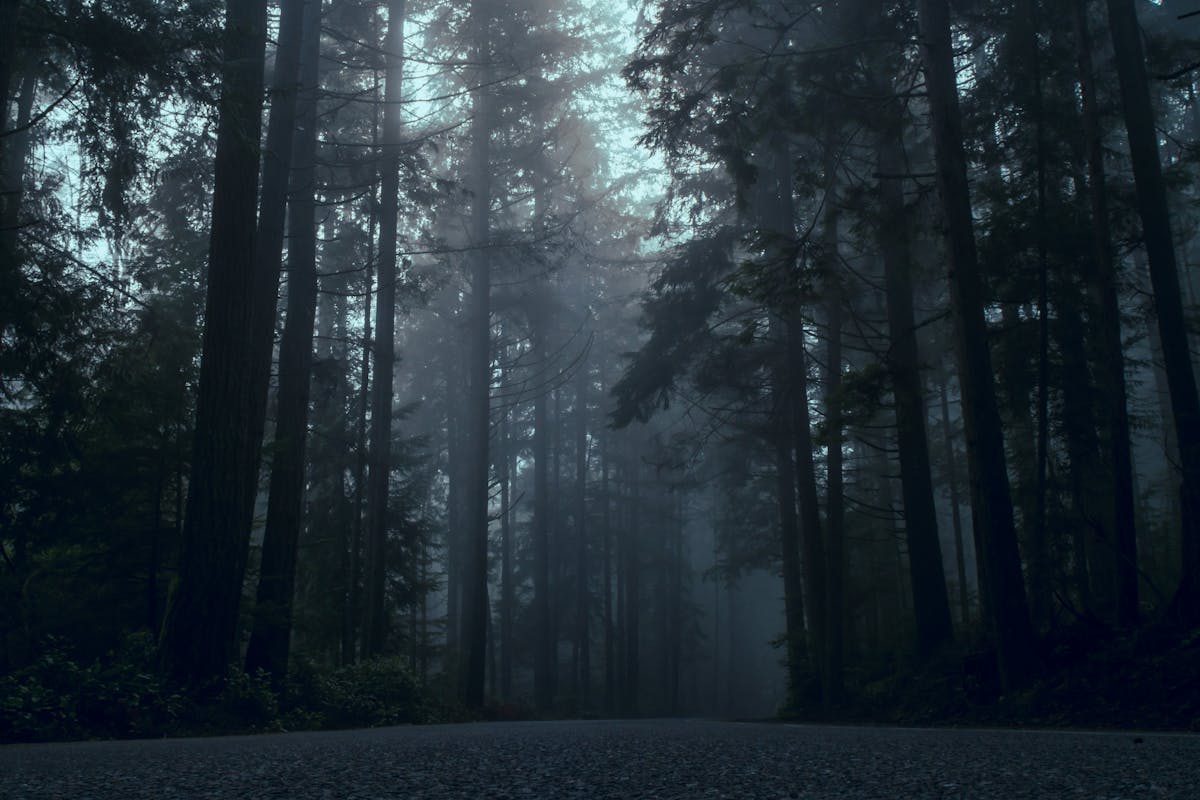
You've heard of hiking. You've heard of camping. But have you heard of forest bathing?
Not a bath. Not a workout. Just you, the trees, and something ancient happening inside your body — this is forest bathing for beginners, and you need zero experience to start.
Shinrin-yoku — Japanese for "forest bathing" — is the practice of immersing yourself in a forest environment using all five senses. No destination. No summit to reach. Just slow, intentional presence among the trees.
The science behind it is solid. The benefits are real. And America's hidden national parks are the perfect place to experience it.
What Is Forest Bathing? The Science Behind Shinrin-Yoku
Forest bathing originated in Japan in 1982 as a national public health initiative by the Forest Agency of Japan. Faced with a mental health crisis driven by overwork and urban stress, the government began funding research into the therapeutic effects of forests. What researchers found changed how we understand nature and human health.
Forest Bathing Benefits — What the Research Shows
🔬 Peer-Reviewed Science — Key Findings
Immune function: Research published in PMC/NIH shows forest bathing significantly increases NK cell activity and anti-cancer proteins — effects lasting at least 7 days.
Stress hormones: Blood cortisol and urinary adrenaline drop measurably after forest bathing, compared to urban environments.
Blood pressure: Sitting or walking in forests for 15–30 minutes decreases blood pressure more significantly than equivalent time in non-forested environments.
Mental health: A systematic review in Environmental Health and Preventive Medicine found significant reductions in tension, anger, fatigue, depression, and confusion after forest bathing.
The mechanism? Trees release phytoncides — natural volatile oils (including α-pinene and limonene) that protect them from insects and disease. When you breathe forest air, you absorb these compounds through your respiratory membranes.
- Natural killer (NK) cell activity increases — the immune cells that fight infection and tumor cells
- Cortisol levels drop measurably within 20 minutes of entering a forest
- Blood pressure and heart rate lower compared to urban environments
- Mood improves, anxiety decreases, cognitive focus sharpens
- Benefits persist 7+ days after a single forest bathing trip
Forest Bathing vs. Hiking — What's the Difference?
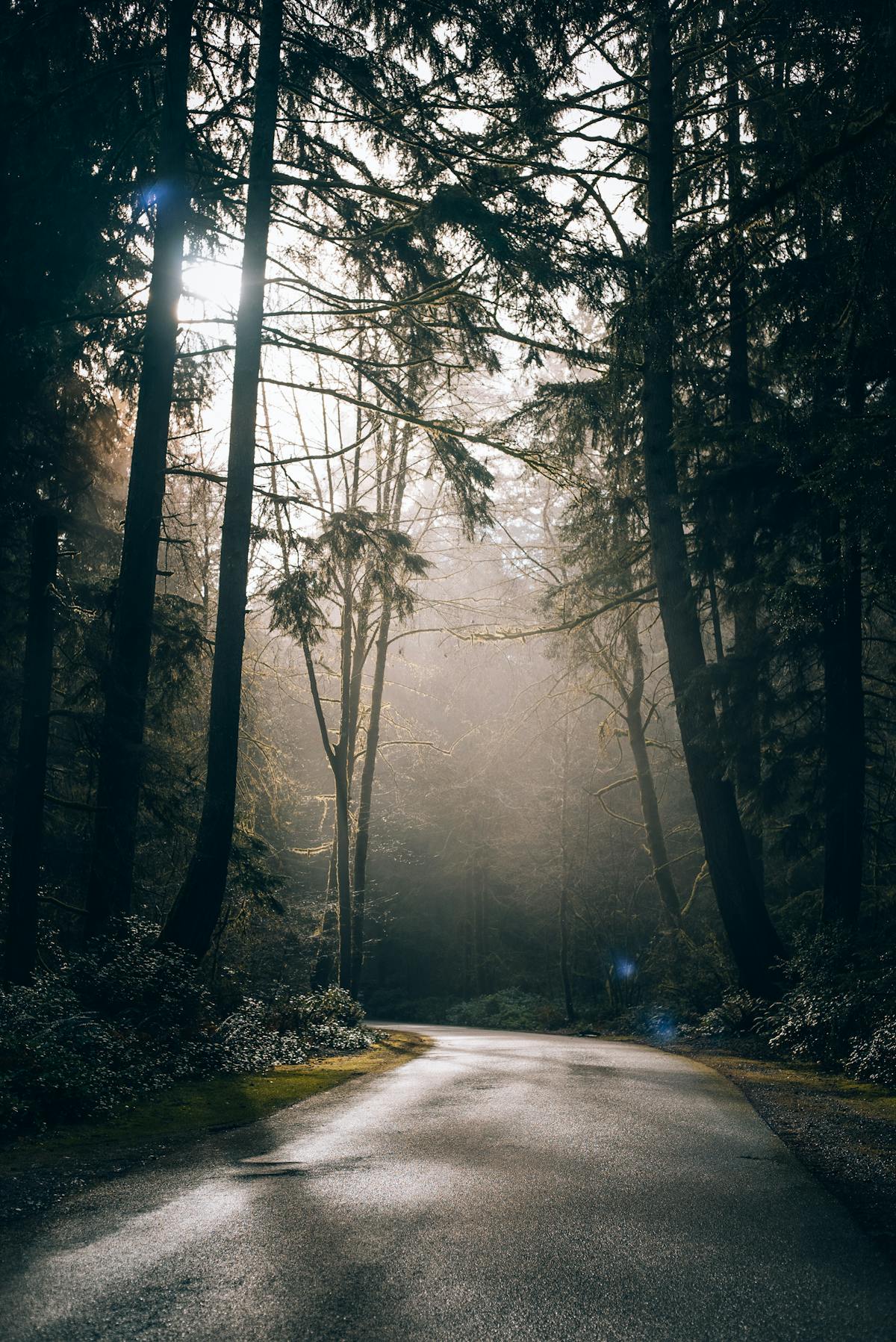
Hiking is goal-oriented. You have a destination — a summit, a waterfall, a campsite. You track miles, gain elevation, push your body. It's wonderful. But it's fundamentally about movement and achievement.
Forest bathing is presence-oriented. There is no destination. The practice is the destination. You move slowly — sometimes just a few hundred yards in an hour. You sit. You listen. You touch bark. You notice the quality of light through leaves.
The Japanese say: in hiking, you pass through the forest. In shinrin-yoku, the forest passes through you.
The 5 Best Hidden National Parks in the USA for Forest Bathing
America's most famous parks — Yellowstone, Yosemite, the Grand Canyon — are magnificent. But they're crowded, loud, and increasingly stressful to visit. If you're wondering where to go forest bathing in the USA, the answer isn't the famous parks. It's the hidden ones — where the trees outnumber the people.
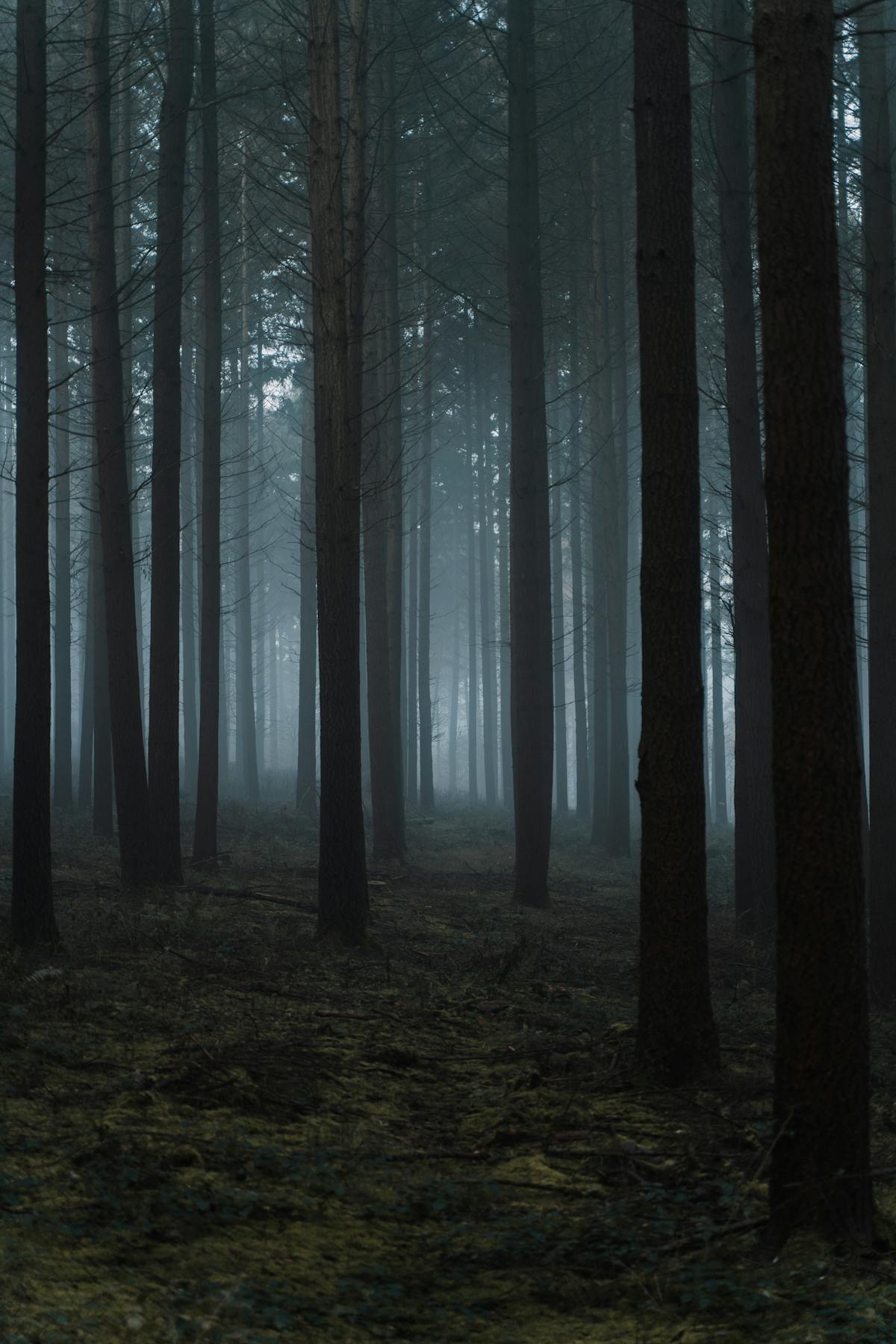
🌿 1. Congaree National Park — South Carolina
The largest intact expanse of old-growth bottomland hardwood forest in the Southeast. Ancient bald cypress and water tupelo trees rise from the floodplain. The air is dense, humid, and rich with phytoncides.
The Boardwalk Loop Trail (2.4 miles) is ideal for forest bathing — flat, slow, surrounded by trees that are hundreds of years old. Come at dawn, when mist rises from the forest floor.
- Best season: October to April (cooler, fewer insects)
- Top spot: Weston Lake Loop — ancient trees, still water, almost no visitors
- Annual visitors: under 200,000 — vs Yellowstone's 4 million
🌲 2. Lassen Volcanic National Park — Northern California
Most visitors come for the geothermal features. But Lassen's forests of red fir and lodgepole pine are extraordinary — trees that have survived volcanic eruptions, their air carrying something ancient and resilient.
- Best season: July to September
- Top spot: Manzanita Lake shoreline — still water, old-growth fir, volcanic reflections
- Elevation 5,800–8,500ft — crisp air amplifies phytoncide absorption
🍂 3. Shenandoah National Park — Virginia
Often overlooked in favor of the Smokies, Shenandoah is a quiet giant. Nearly 300 miles of trails through Appalachian hardwood forests that blaze with color in autumn — just 75 miles from Washington D.C.
- Best season: Late September to November for fall foliage
- Top spot: Dark Hollow Falls — waterfall surrounded by 800-year-old hemlock trees
- Hidden gem: Hawksbill Summit Trail — ancient forest with sweeping views
🏔 4. Black Canyon of the Gunnison — Colorado
The pinyon pine and juniper forest on the canyon rim is unlike anything in the East. Dry, aromatic, ancient. Walk away from the overlooks and into the interior forest for a completely different experience.
- Best season: May–June, September–October
- Top spot: Oak Flat Loop — dense scrub oak, hidden from most visitors
- Bonus: near-zero light pollution — forest bathing by moonlight is extraordinary
🌧 5. Hoh Rainforest — Olympic National Park, Washington
One of the few temperate rainforests in the world. Massive Sitka spruce and Douglas fir draped in luminous green moss. The Hall of Mosses trail (0.8 miles) may be the single greatest forest bathing experience in America.
- Best season: Year-round — rain is part of the experience
- Top spot: Hall of Mosses — 500-year-old maple trees, luminous green light
- Pro tip: Visit midweek to have the trail nearly to yourself
How to Practice Forest Bathing — Step-by-Step Guide
Before You Go — No Guide Needed
- Leave your fitness tracker at the car — no step counts, no miles tracked
- Put your phone on airplane mode
- Plan to cover no more than 1–2 miles in 2 hours
- Bring water — that's all you need
The Five Senses Practice
When you enter the forest, pause. Take three slow breaths. Then deliberately engage each sense:
- Sight: Look for details — bark patterns, a single leaf, the way light moves through branches
- Sound: Identify three separate sounds. Wind. Water. A bird. Then listen for a fourth.
- Touch: Place your hand on a tree. Feel the temperature difference between shadow and sun.
- Smell: The forest smells different near water, near decomposing logs, near flowers. Notice the variations.
- Taste: Forest air has a distinct quality. Breathe through your mouth. Let the phytoncides in.
The Sit Spot — The Most Powerful Practice
Find a spot — under a tree, beside water, in a clearing — and sit still for 20–30 minutes. No phone. No music. Just sit.
Within 10 minutes, the forest will begin to forget you're there. Birds return. Small animals emerge. The forest reveals itself only to people who stop moving.
What to Bring for Forest Bathing
The Right Daypack
For forest bathing, you want something lightweight enough to forget you're wearing it. Our top picks:
🎒 Recommended Daypacks
Osprey Hikelite 26 (~$130) — Best for humid environments like Congaree and Hoh. Mesh back panel keeps you cool and dry. Shop Amazon →
REI Co-op Flash 22 (~$65) — Ultralight at 12.5oz. Perfect for minimalist forest bathing sessions. Shop Amazon →
Matador Freerain22 (~$90) — Essential for Hoh Rainforest. Fully waterproof, packs into its own pocket. Shop Amazon →
→ See our full lightweight daypack guide for hidden national parks
Navigation in Remote Parks
Forest bathing in hidden parks means genuinely remote territory — no cell service, unmarked trails. Before any session:
- Download offline maps via AllTrails or Gaia GPS before leaving cell range
- Tell someone exactly where you're going and when you'll be back
- For serious backcountry, consider a GPS satellite communicator
Forest Bathing — Frequently Asked Questions
What are the main benefits of forest bathing?
Forest bathing boosts NK immune cell activity, reduces cortisol, lowers blood pressure, improves mood, and sharpens focus. Research from PMC/NIH shows these effects can last up to 7 days after a single session. The mechanism involves phytoncides — volatile organic compounds released by trees that you absorb through breathing.
How long should a forest bathing session be?
A minimum of 2 hours is recommended for measurable immune benefits. Most practitioners spend 2–4 hours and cover only 1–2 miles. Even a 20-minute sit spot has measurable effects on cortisol levels.
Is forest bathing the same as hiking?
No. Hiking is goal-oriented — you move toward a destination and track distance. Forest bathing is presence-oriented — there is no destination. You move slowly, engage all five senses, and may spend 30 minutes sitting in one spot. In hiking you pass through the forest; in shinrin-yoku, the forest passes through you.
Where can I go forest bathing near me in the US?
The best hidden national parks for forest bathing are: Congaree NP (South Carolina), Lassen Volcanic NP (California), Shenandoah NP (Virginia), Black Canyon of the Gunnison (Colorado), and the Hoh Rainforest in Olympic NP (Washington). All receive far fewer visitors than famous parks, making for a genuinely quiet experience.
Can I practice forest bathing without a guide?
No. While certified forest therapy guides exist (through the Association of Nature and Forest Therapy), you can practice shinrin-yoku independently. Follow the five-senses practice and the sit spot method above. The forest does the work — you just need to show up and slow down.
The Trees Are Waiting
America's hidden national parks receive fewer visitors in an entire year than Yellowstone receives in a single week. They are quiet. They are wild. The science says they are healing.
You don't need to conquer them. You don't need to photograph them. You just need to arrive, slow down, and breathe.
It just needs you to arrive.
Li Q. (2022). Effects of forest environment (Shinrin-yoku/Forest bathing) on health promotion. PMC/NIH →
Li Q. et al. (2007). Effect of forest bathing trips on human immune function. PMC/NIH →
Wen Y. et al. (2019). Medical empirical research on forest bathing: a systematic review. Environmental Health and Preventive Medicine →
Photo credits: Chris G, eberhard grossgasteiger, Josh Hild, Luca Dross, Niklas Jeromin via Pexels (free to use under Pexels License)
Explore More Hidden Parks
Gear guides, park profiles, and trail reports for America's forgotten wilderness.
hiddenparksusa.site →